CORNELIA PECHOTA
Dr. phil., dipl. Übersetzerin
PUBLIKATIONEN
|
|
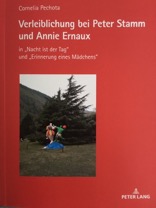
Bücher: Verleiblichung bei Peter Stamm und Annie Ernaux in “Nacht ist der Tag” und “Erinnerung eines Mädchens”. Verlag Peter Lang, 2020 https://www.peterlang.com/document/1111391
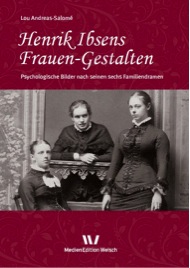
Im Zentrum dieser Publikation stehen die Erzählungen «Nacht ist der Tag» (2013) von Peter Stamm, Träger des Schweizer Buchpreises 2018, sowie die «Erinnerung eines Mädchens» (2018) der französischen Bestseller-Autorin Annie Ernaux. Damit widmet sie sich zwei Schreibenden der Gegenwart, die als prominente Stimmen der europäischen Öffentlichkeit umfassend und hitzig in den internationalen Feuilletons besprochen werden. Gerade im Rahmen des viralen Hashtags #MeToo und den nachfolgend diskutierten Machtverhältnissen zwischen den Geschlechtern haben Annie Ernaux’ “Erinnerung” und das Thema dieses Buchs jüngst an Bedeutung gewonnen. Mithilfe aktueller literaturwissenschaftlicher Zugänge werden in den ausgewählten Romanen zwei Liebesbeziehungen untersucht, von denen eine autobiografische Züge trägt. Die Interpretation der vielschichtigen Texte im Anschluss an Maurice Merleau-Pontys Phänomenologie der Leiblichkeit konkretisiert die Rolle und Relevanz von Literatur in aktuellen politischen und sozialen Diskussionen. Merleau-Pontys Unterscheidung von “corps objectif” (,Körper’) und “corps propre” (,Leib’) erweist sich in dieser Analyse als bedeutungsvoll, markiert sie doch die Problematik der Außen- und Innenwahrnehmung im medizinischen und zwischengeschlechtlichen Bereich. Rezension: Jörg Sternagel in: „Freiburger literaturpsychologische Gespräche 2023“, Band 42: „Wahn-Sinn“, S. 294-297. Robert Musil und James Joyce 48 S. Diplomica Verlag GmbH 2014 Cornelia Pechota, Herausgeberin (Kommentare und Nachwort) : Lou Andreas-Salomé : Henrik Ibsens Frauen-Gestalten 260 S. MedienEdition Welsch / 2. Auflage 2019 ISBN 978-3-937211-34-3 (Buch)
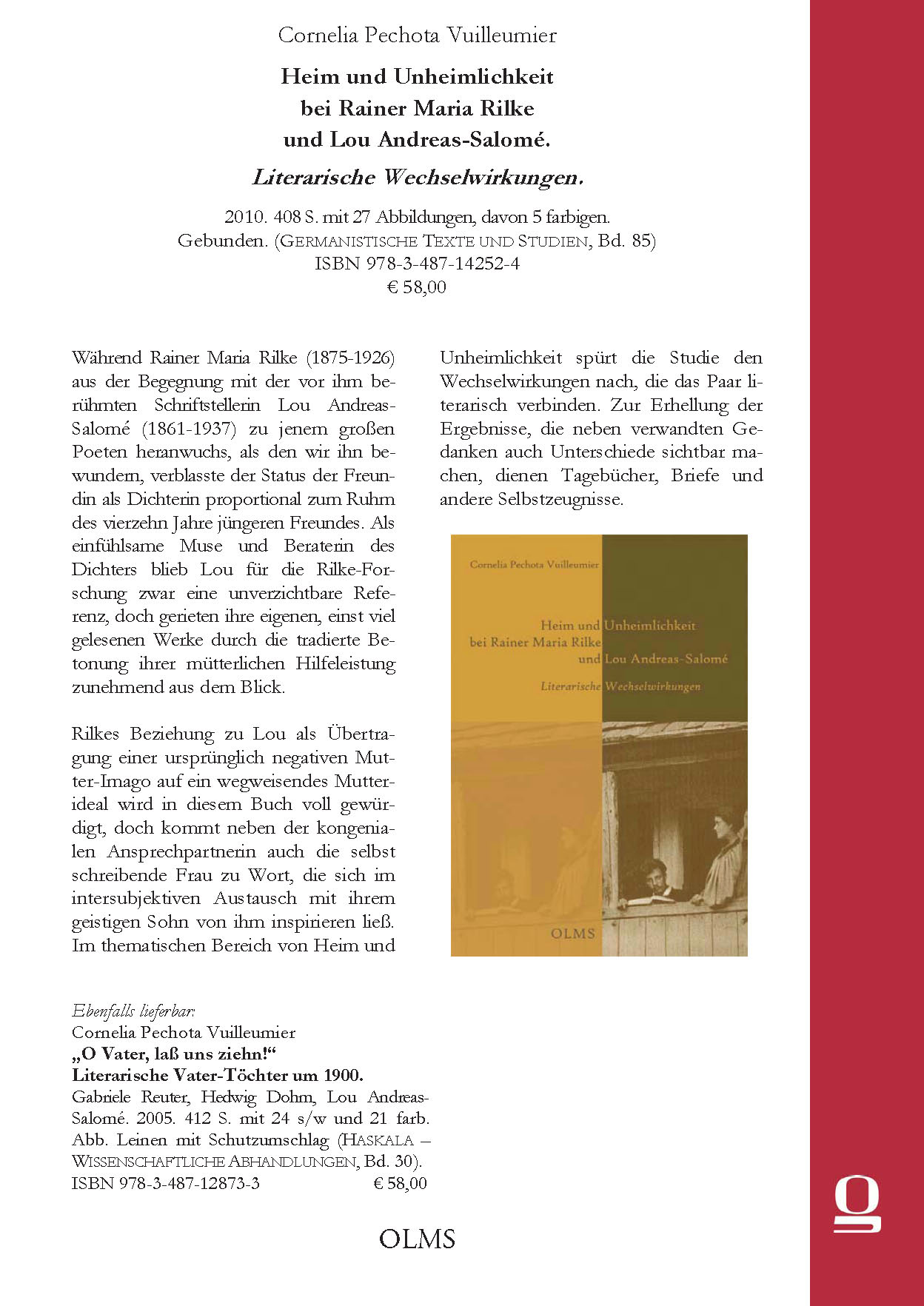
Mit Henrik Ibsens Frauen-Gestalten legte Lou Andreas-Salomé 1892 den Grundstock für ihren Ruhm als Autorin und Interpretin der literarischen Moderne. Nur zwei Jahre später folgte ihr Buch Friedrich Nietzsche in seinen Werken, das diese Bekanntheit weiter festigte. Aus der Ibsen-Forschung sind ihre einfühlenden Analysen seiner Familiendramen bis heute nicht wegzudenken. Motiviert durch ihre eigene Lebenssituation, ist es vor allem Ibsens großes Thema der »Selbstverwirklichung in der Ehe«, das Lou Andreas-Salomé interessiert. Ihre Fähigkeit, die Problematik der Frauen-Gestalten von Nora bis Hedda Gabler empathisch zu durchdringen und die Befreiungsstrategien literarischer Figuren so zu beschreiben, als seien sie reale Frauen, macht den besonderen Erkenntnisgewinn ihrer Studien aus und erhebt den Text zudem in den Rang einer eigenen Dichtung. Die Neuausgabe – ergänzt durch die wichtigsten zeitgenössischen Rezensionen, die das Buch begeistert besprachen – ermöglicht nun endlich wieder den Zugang zu einem der zentralen Werke Lou Andreas-Salomés und bietet der Ibsen- und Naturalismusforschung unverzichtbares Material. “Lovely Books “, Dezember 2013: http://www.lovelybooks.de/autor/Lou-Andreas--Salomé-/Henrik-Ibsens-Frauengestalten-1071117875-w/rezension/1071121764/ "Gratulation zu diesem Buch und zu all der editorischen Energie und dem Spürsinn, die Sie damit einmal mehr beweisen. Mit Lou haben Sie offensichtlich eine Figur gefunden, die wie ein verborgenes Gravitationszentrum der Epoche alle deren widersprüchlichen Tendenzen anzieht und sie auch zu artikulieren versteht. Wie intensiv und weit gefächert dies in Sachen Ibsen der Fall war, war mir noch nicht bewusst; es ist sehr stimmig und sinnvoll, dass und wie Sie die titelgebende Publikation von Lou mit den weiteren Aufsätzen umgeben haben; und was Sie im Nachwort alles an kontextualisierender und dann auch deutender Information beibringen, das ist beeindruckend. Ich kann da einfach Einiges erfahren und lernen, und ich bin vermutlich und hoffentlich längst nicht der (oder die) Einzige!" Prof. Dr. Peter Utz, Universität Lausanne oder direkt beim Georg Olms Verlag, Hildesheim Starting from Freud’s essay Das Unheimliche, this study explores the intersubjective space, where the lifelong relationship of Rainer Maria Rilke (1875-1926) and Lou Andreas-Salomé (1861-1937) evolved. The literary productivity of their mutual attachment reaches far beyond the inspiration which a poet may normally owe to his muse. When, in 1897, René Rilke meets Lou Andreas-Salomé in Munich, he is 22 years old. Lou, who is 14 years older than him, has already gained fame for several novels, critical works and articles. Caring about the image of her fervent lover, she advises him to change his first name from René to Rainer and to improve his handwriting. Rilke follows her advice and makes his first steps toward the artistic accomplishment she expects from him. In 1898 the young poet writes his Florentine Diary for Lou, and after the successful transformation of their love into friendship she remains his maternal counsellor until his death. However, whereas it is well known that for the Notebooks of Malte Laurids Brigge Rilke took inspiration from certain letters he had previously addressed to Lou, this intertextual practice has scarcely been emphasized in the work of his most important female correspondent. This book is a tribute to the creative reciprocity between the two friends, who shared more than is generally admitted. It not only recalls Rilke’s productive transference of infantile desires toward the maternal substitute he found in Lou, but also shows his inspiring presence in the texts of a woman whose glory as a muse has often occulted her own literary creation. Relying on personal testimonies left by Rilke and Lou – especially on their abundant correspondence – the author of this volume puts focus on the polarity of Heim and Unheimlichkeit in their works and, in an intertextual lecture, makes visible their intimate complicities and complementarities, but also meaningful and sometimes surprising differences.
Ursula Pia Jauch in: “Neue Zürcher Zeitung“, 10. August 2010.l Romana Weiershausen in : “Germanistik“, Sonderdruck, 2011, Bd. 52, H. 3-4, S. 884-885 : “Mit dem methodischen Leitbegriff der ‘Wechselwirkung’ verbindet sich ein permanent doppelter Blick auf Andreas-Salomé und Rilke, mit dem es gelingt, die gängigen Hierarchisierungen zwischen der Autorin und dem Autor zu überwinden : Jede Interpretation wird mit Texten des jeweils anderen perspektiviert, wobei kenntnisreich nicht nur literarische Texte (Erzähltexte und Lyrik), sondern auch essayistische Schriften und autobiografische Quellen aufeinander bezogen werden. Der intertextuelle Ansatz ist umso produktiver, als er mit dem ambivalenten Motivkomplex um Heim und Unheimlichkeit einem thematischen Kern des Werks sowohl von R. als auch (in anderer Gewichtung) von Andreas-Salomé gilt. Die Studie, die psychoanalytisch grundiert ist (u. a. mit Rekurs auf Freuds berühmte Studie zum Unheimlichen), bezieht wesentliche Impulse aus einer Bewertung des Beziehungsgefüges (wie Mutter und Sohn) zwischen beiden Dichterpersönlichkeiten. Das Ergebnis ist ein vielschichtiges Netz von Querbezügen, bei denen (mit allerdings deutlicher biografischer Ausrichtung) die eingeführten Trennungen zwischen Leben und Werk sowie zwischen den Schreibweisen (Dichtung und theoretische Reflexion) überschritten werden : Darin trägt die Studie dem grenzüberschreitenden Schaffen R.s und Andreas-Salomés konzeptionell Rechnung und liefert lohnende Einblicke in eine einzigartige Dichter- und Dichtungs-Konstellation.“ Peter Dettmering in: “Freiburger literaturpsychologische Gespräche“ 30/2011: “Kindheit“, Freiburg 2011, S. 227-229. Rüdiger Görner in: “Blätter der Rilke-Gesellschaft“ 31/2012.
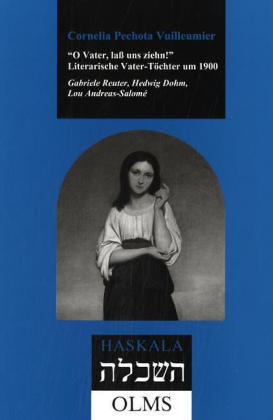
" 'O Vater, lass uns ziehn !' Literarische Vater-Töchter um 1900. Gabriele Reuter, Hedwig Dohm, Lou Andreas-Salomé". "Lou in Cosmopolis: Rilkes Freundin aus komparatistischer Sicht". In: "Blätter der Rilke-Gesellschaft" 25/2004. Frankfurt/Main 2004, S. 231-234. Christiane Wieder: “Die Psychoanalytikerin Lou Andreas-Salomé. Ihr Werk im Spannungsfeld zwischen Sigmund Freud und Rainer Maria Rilke“. Göttingen 2011. In: “Blätter der Rilke-Gesellschaft“ 31/2012. Göttingen 2012, Gerda Döring: „Die Unbekannte. Miniaturen“. Einsiedeln 2018; „Ilonka und andere Erzählungen“. Einsiedeln 2014. In: “Blätter der Rilke-Gesellschaft“ 35/2020. Göttingen 2020, S. 285-286. Beiträge: “Väter in der Literatur von Frauen um 1900. Die décadence als Chance der Töchter”. In: “Entwürfe. Zeitschrift für Literatur” 51/2007: “Vater”. Zürich 2007, S. 65-70. “Kunst als Therapie in Lou Andreas-Salomés Roman “Das Haus“. Die kreative Heilung im Lichte ihrer Narzissmus-Theorie“. In: “Ihr zur Feier. Lou Andreas-Salomé. Interdisziplinäres Symposium aus Anlass ihres 150. Geburtstages“, hg. v. Lou Andreas-Salomé Institut, Göttingen. Taching am See 2011, S. 75-98. "Ihr hattet euch noch nicht gesucht: da fandet ihr mich. Nietzsches Einfluss auf schreibende Frauen des Fin de siècle“. In: Jahrbuch “Nietzscheforschung“ 19/2012: “Frauen: ein Nietzschethema? Nietzsche: ein Frauenthema?“ Berlin 2012, S. 13-29. “Frauen und Frauenliteratur“. In : “Fin de Siècle“, Reihe “Epoche, Autoren, Werke“, hg. v. Johannes G. Pankau. Darmstadt 2013, S. 37-54. “Lou Andreas-Salomé zwischen Königsberg und Kaliningrad. Eine historisch-biografische Situierung“. In: “Kultursoziologie“ 23/1. Potsdam 2014, S. 56-66. “Ein später Brief Rilkes und seine Valéry-Übertragung “Tante Berthe“ “. In: “Blätter der Rilke-Gesellschaft“ 32/2014. Göttingen 2014, S. 326-334. “Rilke, Lou und die Danziger Schriftstellerin Johanna Niemann“. In: “Blätter der Rilke-Gesellschaft“ 34/2018. Göttingen 2018, S. 40-57.
Portug. Übersetzung als Vorwort zu: Lou Andreas-Salomé: „Sobre o Tipo Feminino. E outros textos“. Editora Blucher: São Paulo 2022. https://www.blucher.com.br/sobre-o-tipo-feminino
Vorträge: “Rilke comme personnage de fiction chez Lou Andreas-Salomé“. Fondation Rilke / Rilke Stiftung in Sierre (Schweiz), 28. Januar 2007. “Ihr hattet euch noch nicht gesucht: da fandet ihr mich. Nietzsches Einfluss auf schreibende Frauen des Fin de siècle“. Nietzsche-Dokumentationszentrum Naumburg, 30. März 2011. “Kunst als Therapie in Lou Andreas-Salomés Roman “Das Haus“. Die kreative Heilung im Lichte ihrer Narzissmus-Theorie“. Lou Andreas-Salomé Institut Göttingen, 25. Juni 2011. “Narcissisme et créativité chez Lou Andreas-Salomé“. Association genevoise de femmes diplômées des universités (AGFDU), CLAFG, Genf, 8. November 2011. “ “Ich will Du sein.“ Produktive Spiegelungen zwischen Rainer Maria Rilke und Lou Andreas-Salomé “. Nietzsche-Forum München e. V. , Montag, 29. April 2013. Einladung Nietzsche-Forum München “ “Ich will Du sein.“ Produktive Spiegelungen zwischen Rainer Maria Rilke und Lou Andreas-Salomé “. Internationale Buchmesse Genf (“Salon du livre et de la presse“), 5. Mai 2013. “Art as Therapy in Lou Andreas-Salomé’s Novel “The House”. The Creative Healing in the Light of her Theory on Narcissism“. Symposium European Society of Aesthetics and Medicine (ESAEM), Berliner Institut für Psychotherapie und Psychoanalyse, Berlin, 25. Mai 2013.“Sehnsuchtsort Cavalière. Das Ziel, das Rilke nicht mehr erreichte“. Tagung der Internationalen Rilke-Gesellschaft, Forsteria Valdese, Florenz, 25. September 2014. “Der Wunsch nach Verführung in der heutigen Literatur. Zur Struktur des Begehrens in Peter Stamms Roman “Nacht ist der Tag““. Gemeinsame Tagung der European Society of Aesthetics and Medicine, des Instituts für Sozialästhetik und psychische Gesundheit der Sigmund Freud Privat Universität Wien und der Immanuel Klinik Rüdersdorf, Siemens Villa – am Kleinen Wannsee 5, Berlin, 7. August 2015. “Art and Alterity. The meaning of vision in Merleau-Ponty's philosophy“. Generalversammlung der European Society of Aesthetics and Medicine, Berliner Institut für Psychotherapie und Psychoanalyse, Berlin, 27. August 2016. “Rilke, Lou und die Danziger Schriftstellerin Johanna Niemann“. Tagung der Internationalen Rilke-Gesellschaft, Uniwersytet Gdanski, Gdansk-Oliwa, 22. September 2016. “Existenz als Experiment. Dimensionen der Wahrnehmung bei Lou Andreas-Salomé“. Internationale Konferenz zum 80. Todestag von Lou Andreas-Salomé, ESPE/Universität Straßburg, 10. Februar 2017. “Lou Andreas-Salomé: Pionierin der Moderne“. Im Rahmen der Ausstellung “Rilke und Russland“ im Strauhof (Zürich), Buchhandlung Beer, Zürich, 2. November 2017. “Lou Andreas-Salomé: Pionierin der Moderne“. Im Rahmen der Moskauer Ausstellung "Rilke und Russland”. Russische Staatsuniversität für Geisteswissenschaften/ RGGU Moskau, 7. Februar 2018. “Ein produktives Gespann: Rainer Maria Rilke und Lou Andreas-Salomé“. 15. Silser Kunst- und LiteraTourtage. Sommer 1919: Rainer Maria Rilke in Sils und Soglio. Hotel Waldhaus, Sils/Engadin, 25. August 2019. "Jesus als Jude. Lou Andreas-Salomés Aufsatz „Jesus der Jude“ und Rilkes „Christus-Visionen“ “. Tagung der Internationalen Rilke-Gesellschaft, Benediktinerabtei Gerleve (Münsterland), 24. September 2022.
|
||